

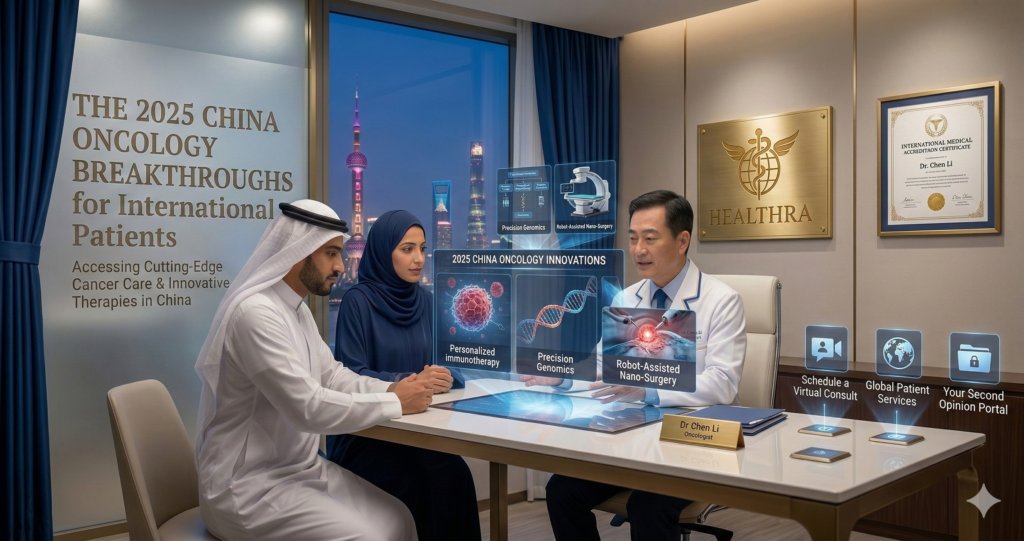
The moment a family in Saudi Arabia or the wider Gulf Cooperation Council (GCC) region receives a complex oncological diagnosis, the local healthcare environment often feels suddenly restrictive. While the medical infrastructure in Riyadh, Dubai, and Doha has advanced significantly, certain rare or refractory malignancies require a level of specialization and technological intervention that is currently centralized in global hubs of innovation. In this high-stakes search for a lifeline, the oncology second opinion China online has emerged as a critical clinical gateway. This remote consultation process serves as more than just a medical review; it is a strategic bridge that connects Saudi families with groundbreaking cellular therapies and precision radiotherapy protocols that are often available in China years before they reach broader international markets.
For the decision-makers in a Saudi household—frequently the family patriarch or a designated clinical spokesperson—the priority is not merely finding a hospital, but finding a physician-led partnership that understands the cultural and medical nuances of the Gulf. Healtra.co, a platform founded by neurosurgeons and physicians with over 5 years of experience in the GCC healthcare sector, addresses this need by providing a transparent, 72-hour roadmap for international care. By facilitating the ability to meet Chinese oncologist before travel, Healtra ensures that families are not making decisions based on marketing brochures, but on clinical data and direct doctor-to-doctor communication.
The pursuit of an oncology second opinion China online is fundamentally driven by the necessity for diagnostic absolute. Research from 2024 indicates that diagnostic errors in oncology occur at a rate of 10% to 30%, depending on the tumor’s rarity and the complexity of the molecular profile. In many cases, these discrepancies are not due to physician error but the lack of exposure to rare tumor sub-types that a major tertiary center in Beijing or Shanghai might see thousands of times per year. For a patient in Saudi Arabia, where specific genetic predispositions may lead to rare presentations, the expertise of a specialist who focuses exclusively on a single malignancy is invaluable.
Furthermore, the therapeutic landscape is shifting from “one-size-fits-all” chemotherapy toward “hyper-personalized” oncology. This requires a sophisticated interpretation of biopsy results, CT, MRI, and PET-CT scans in DICOM format—all of which can be reviewed remotely through secure telemedicine platforms. When families book cancer consultation China from Saudi, they are initiating a multidisciplinary team (MDT) review. This model ensures that the patient’s file is not just seen by one oncologist, but is collectively analyzed by surgeons, radiologists, pathologists, and immunotherapy experts to create a unified treatment strategy.
Send a Medical Report for review!
The value of these remote opinions is highlighted by a longitudinal study assessing second-opinion programs. The data suggests that nearly a third of patients receive a revised diagnosis, and over 40% receive an entirely different treatment recommendation after an expert review.
Metric | Regional/County Hospital Consistency | Global Tertiary Center (e.g., China) | Impact of Second Opinion |
Diagnostic Accuracy | 64.44% – 73.47% | 90% – 95% | Prevents misdiagnosis in 30% of cases |
Treatment Confirmation | < 20% | 85% – 90% | Adjusts treatment in 30% – 50% of cases |
MDT Involvement | Occasional/Single Doctor | Mandatory/Multi-Specialist | Leads to 15% – 20% better outcomes |
This underlying trend suggests that the “second opinion” is not a luxury but a clinical safety net. For the GCC patient, this process identifies whether the local recommendation of radical surgery is truly necessary or if a more advanced, less invasive option like NanoKnife or CAR-T therapy might offer a superior quality of life.
China has rapidly ascended to a position of global leadership in oncology, currently conducting approximately 39% of all global oncology clinical trials. This massive research output is not merely academic; it translates into faster access to life-saving medicines. For instance, international medicines and devices are often available in specialized zones like Hainan within months of global approval, bypassing the years of regulatory delay common in other regions.
One of the primary reasons GCC families look toward China is the development of Chimeric Antigen Receptor (CAR) T-cell therapy. This process involves extracting the patient’s own $T$ cells, genetically modifying them to express receptors that target specific cancer antigens (such as $CD19$ or $BCMA$), and re-infusing them into the patient.
In 2025, the China National Medical Products Administration (NMPA) approved several landmark CAR-T products, including Ranicabtagene Autoleucel and Inaticabtagene Autoleucel, targeting relapsed or refractory Large B-Cell Lymphoma (LBCL) and Acute Lymphoblastic Leukemia (ALL). For international patients, these developments signal not only clinical excellence but also an unprecedented speed of access. While wait times for CAR-T in the United States can stretch to six months, Chinese centers often begin the harvesting process within two to six weeks.
Aspect of CAR-T | United States | Germany | China (2025) |
Therapy Cost | $\$375,000 – \$475,000$ | $\$280,000 – \$320,000$ | $\$ 120,000 – \$150,000$ |
Total Package Cost | $\$475,000 – \$625,000$ | $\$350,000 – \$420,000$ | $\$ 150,000 – \$200,000$ |
Typical Wait Time | 3 – 6 Months | 2 – 4 Months | 2 – 6 Weeks |
Success/Response Rate | 80% – 90% | 80% – 90% | 79% – 89% |
The economic efficiency of Chinese CAR-T therapy is a result of manufacturing innovations, such as “Closed Automated Systems,” which reduce contamination risks and labor costs while maintaining efficacy. For a Saudi family, this means the ability to access a potentially curative treatment for a fraction of the cost required in the West, without a compromise in safety or survival outcomes.
For tumors located near “critical structures” like the brain, spine, or optic nerves, traditional radiotherapy carries the risk of significant collateral damage. Proton therapy solves this through the “Bragg Peak” phenomenon. Unlike X-rays, which release energy all along their path through the body, a proton beam can be calibrated to release its maximum energy precisely inside the tumor and then stop immediately.
In 2025, China’s development of domestic proton machines has further democratized this technology. The Shanghai Proton and Heavy Ion Center (SPHIC) and Ruijin Hospital are at the forefront, offering treatments at costs nearly half that of imported Western machines. This is particularly vital for pediatric oncology, where minimizing radiation to developing organs is essential to prevent long-term cognitive decline and secondary cancers.
Condition | Proton Therapy Cost (China) | Proton Therapy Cost (USA) | Clinical Benefit |
Pediatric Brain Tumor | $\approx \$65,884$ | $>\$150,000$ | Spares healthy brain tissue |
Prostate Cancer | $\approx \$23,530$ | $\approx \$100,000$ | Reduces urinary/rectal side effects |
Head and Neck Cancer | $\approx \$ 76,472$ | $>\$180,000$ | Avoids damage to salivary glands |
Pancreatic cancer has historically been difficult to treat surgically because the tumors often entwine with major blood vessels like the portal vein. The “NanoKnife,” or Irreversible Electroporation (IRE), represents a major advancement for these cases. During the procedure, high-voltage electrical pulses create nano-sized pores in the cancer cell membranes, causing cell death while leaving the protein-based collagen structures of blood vessels and bile ducts intact.
By 2025, China has developed a comprehensive system for NanoKnife ablation, offering hope to the 80% of pancreatic cancer patients who are diagnosed at an inoperable stage. For international patients, this technology can convert an “incurable” condition into a controllable or even curable one, often at 50% of the cost of Western IRE procedures.
Reach the Healtra doctor team!
In the complex world of medical tourism, the greatest barrier for Saudi families is not technology, but trust. Traditional travel agents often treat a medical journey as a logistical exercise—booking flights and hotels while neglecting the clinical core. Healtra.co addresses this by operating as a physician-led coordination platform. Every case is reviewed by MDs with over two decades of experience in the GCC, ensuring that the patient is matched with a specialist based on clinical outcomes, not hospital commissions.
When dealing with aggressive malignancies, every day spent waiting for a hospital response is a day the cancer could progress. Healtra’s commitment to providing a comprehensive medical plan within 72 hours is a critical clinical service. This process involves a structured timeline:
This speed allows families in Riyadh or Jeddah to move from “panic and confusion” to a decisive action plan in less than three days.
A primary fear for GCC medical tourists is “hidden costs.” Healtra.co provides itemized, transparent quotes that cover surgery, anesthesia, hospital stays, and post-operative monitoring. By pre-negotiating rates with top-tier Chinese centers, Healtra ensures that families pay institutional rates rather than “international retail” prices, often saving them thousands of dollars on the total treatment package.
The transition to a foreign medical system can be physically and emotionally draining for a patient already weakened by cancer. Recognizing the strategic importance of the GCC market, leading Chinese hospitals have invested heavily in “Muslim-friendly” infrastructure. This cultural alignment is essential for spiritual healing and patient comfort.
Institutions like the Royallee Cancer Center and Fuda Cancer Hospital in Guangzhou, as well as Peking University International Hospital, have established standards of care that cater to Islamic values.
Feature | Chinese Accredited Oncology Centers | Impact on GCC Families |
Religious Facilities | Dedicated prayer rooms with Qiblah and Wudu facilities | Allows for spiritual maintenance during crisis |
Dietary Support | Independent Halal kitchens and customized menus | Ensures dietary laws are strictly followed |
Accommodation | Multi-bedroom suites for family members and caregivers | Supports the GCC “collective decision” model |
Language Support | Native Arabic-speaking medical coordinators provided by Healtra | Prevents clinical miscommunication |
A significant logistical breakthrough is the visa-free policy for Saudi citizens. As of 2025/2026, Saudi passport holders can enter China for medical purposes without a visa for stays of up to 30 days. If a treatment plan requires a longer stay—such as a 6-week course of proton therapy—Healtra’s coordinators assist in obtaining a “stay permit” from local security organs to ensure the medical journey remains legal and uninterrupted.
When Healtra.co facilitates an oncology second opinion China online, the choice of hospital is based on the specific sub-type of cancer. China’s “top-tier” tertiary hospitals are highly specialized.
As the leading center for hematologic malignancies and pediatric cancers, Peking University handles a massive volume of cases. Their International Medical Department provides English-speaking services and a structured workflow for remote record reviews.
FUSCC is the gold standard for precision oncology and radiotherapy in Eastern China. With state-of-the-art DNA and proteogenomic platforms, they facilitate biomarker testing and genomic sequencing that allow for the implementation of highly targeted drug therapies.
Jiahui offers a blend of Western-style international patient services and Chinese clinical breakthroughs. They have a distinguished reputation for treating international patients with multiple myeloma using CAR-T therapy, providing a Zoom-based multidisciplinary consultation before the patient even leaves their home country.
A unique aspect of seeking cancer treatment in China is the strategic integration of TCM with modern Western protocols. While CAR-T and NanoKnife target the tumor, TCM is used to support the patient’s immune system and reduce the side effects of chemotherapy and radiation. Data from Chinese clinical trials show that 81% of studies test TCM alongside conventional treatments, often leading to improved quality of life and better tolerance of aggressive therapies. For a GCC patient, this holistic approach offers a “dual-track” healthcare experience that addresses both the disease and the overall well-being of the individual.
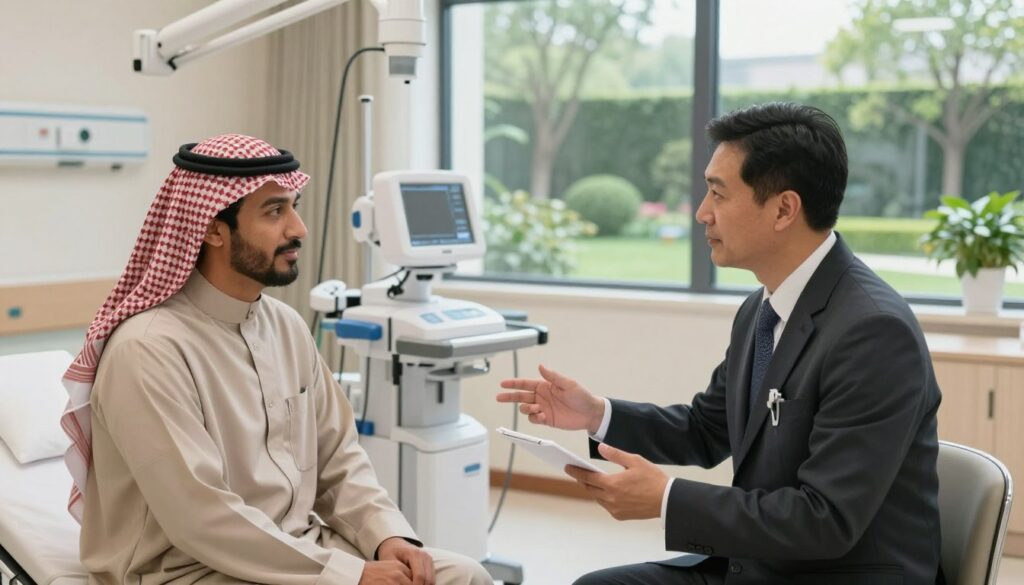
The psychological weight of a cancer diagnosis can be paralyzing. Healtra.co’s ability to organize a virtual meeting to meet Chinese oncologist before travel serves to break this paralysis. During these Zoom or telemedicine sessions, the family can:
This level of transparency builds a foundation of trust that is essential for a high-risk medical journey.
In the context of life-threatening illnesses, speed is a clinical necessity. A key reason why patients look beyond the USA and Germany is the “waiting list” crisis. Press Association analysis in late 2025 showed that even in leading Western trusts, one in seven patients waited more than 104 days for cancer treatment. In contrast, Chinese international departments are designed for efficiency.
Treatment Category | China Wait Time (JCI Center) | Germany Wait Time | UK/USA Wait Time |
Diagnostic Workup | 1 – 3 Days | 1 – 2 Weeks | 2 – 4 Weeks |
Surgery Scheduling | 3 – 7 Days | 2 – 4 Weeks | 4 – 8 Weeks |
CAR-T Cell Harvesting | 2 – 4 Weeks | 8 – 12 Weeks | 12 – 24 Weeks |
For an aggressive liver cancer or a relapsed leukemia, the 10-week difference between a German hospital and a Chinese one can be the difference between a successful intervention and disease progression.
While China offers advanced medical hope, independent travel can be fraught with risks. Language barriers remain a primary obstacle, as English proficiency among nursing staff may be limited. Furthermore, “miracle cure” claims by unaccredited clinics can lead patients away from evidence-based care.
Healtra.co mitigates these risks by:
For families in Saudi Arabia and the GCC, the oncology second opinion China online represents the first step in a journey of reclaimed hope. The shift in global oncology trends for 2025 and 2026 clearly favors hubs like China that can offer revolutionary therapies—CAR-T, Proton Therapy, and NanoKnife—with a speed and economic accessibility that the Western world is currently struggling to match.
However, the medical success of this journey depends on the quality of the coordination. By choosing a physician-led platform like Healtra.co, families ensure that their medical decisions are guided by clinical integrity, cultural alignment, and price transparency. With a dedicated 72-hour plan and full Arabic support, the “lifeline” to China is no longer a logistical gamble, but a professionally managed pathway to the world’s most advanced cancer care.
The convergence of Chinese medical innovation and Healtra’s GCC expertise provides a unique ecosystem where trust and technology meet. For the patient in Riyadh or Jeddah, the world is no longer just very large; it is a place where the right answers are accessible within three days, and the world’s best oncologists are only a video call away.