

The diagnosis of a complex malignancy is a watershed moment for any family, but for those in Saudi Arabia and the broader GCC region, it often marks the beginning of an arduous search for medical excellence that transcends borders. Traditionally, the gaze of the Gulf has been directed toward the high-cost corridors of London, Houston, or Rochester. However, a significant paradigm shift is occurring in 2025. China has emerged as a global vanguard in oncological innovation, offering access to next-generation treatments like Chimeric Antigen Receptor (CAR) T-cell therapy, proton beam radiation, and advanced minimally invasive ablation techniques that are often more accessible and advanced than those found in traditional Western hubs. For a family in Riyadh or Dubai, the priority is clear: finding the best cancer hospital China for international patients that offers not just technology, but a clinical pathway built on trust, transparency, and cultural empathy.
Healtra.co stands at the intersection of this global medical transition, serving as a physician-led bridge between the GCC and China’s most prestigious JCI-accredited oncology centers. We understand that for our patients, the decision to travel is never just about the technology—it is about the family-centered decision-making process, the need for dedicated Arabic-speaking support, and the peace of mind that comes from a doctor-led guidance model.
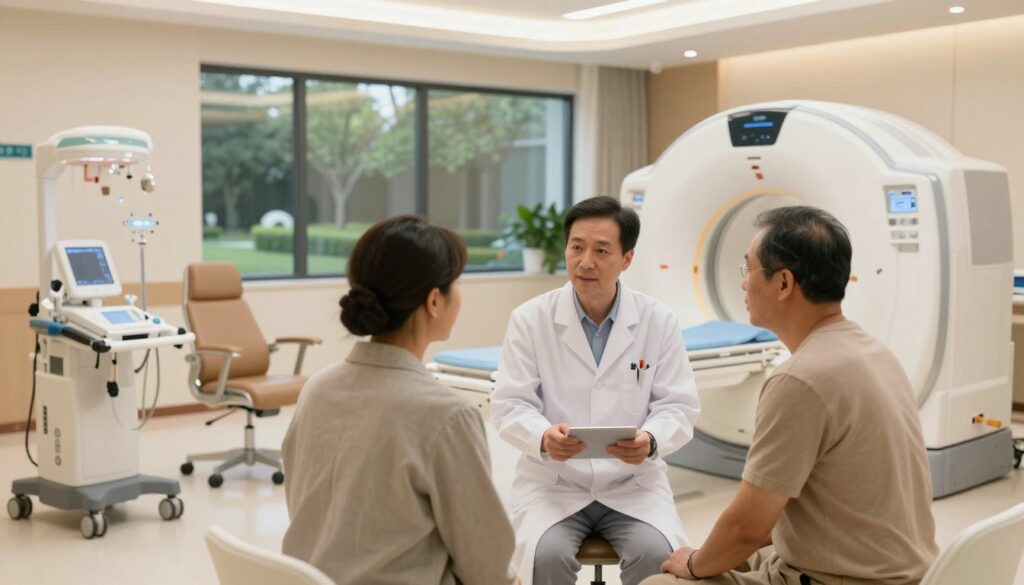
By providing a comprehensive 72-hour medical plan and a vetted global network, we eliminate the noise of traditional medical tourism, allowing families to focus entirely on recovery and hope.
The rise of China as a premier destination for oncological care is not an accidental byproduct of globalization; rather, it is the result of massive strategic investment in biotechnology and clinical research. China now accounts for approximately 39% of all global oncology clinical trials, a statistic that reflects its role as a primary engine for new drug development and therapeutic innovation. For GCC families, this means that treatments which might still be years away from regulatory approval in other regions are already being administered with high success rates in China’s “Level 3, Grade A” hospitals—the highest tier in the Chinese healthcare system.
One of the most compelling reasons for this shift is the “time-to-treatment” factor. In the United States or Europe, the wait time for a specialized consultation for rare or complex cancers can stretch into months, a delay that is often unacceptable for aggressive malignancies. In contrast, China’s digitalized and high-efficiency medical infrastructure allows for remarkably streamlined experiences. It is common for international patients to undergo consultations, diagnostic imaging, and the formulation of a multidisciplinary treatment plan within days of arrival. This efficiency is a core tenet of the Healtra philosophy; we recognize that in the race against time, a 72-hour medical plan can be a life-defining intervention for a family in crisis.
Furthermore, the clinical volume in China’s top-tier hospitals creates a level of procedural mastery that is statistically superior. The top 100 tertiary hospitals in China performed nearly 8 million surgeries in 2021, meaning the average surgeon in these centers handles a volume of cases that far surpasses their counterparts in the West. For complex procedures like esophageal or pancreatic resections, this high-volume experience is directly correlated with lower complication rates and improved long-term survival outcomes.
Feature | China Oncology (Healtra Network) | Western (USA/Europe) Centers | Saudi/GCC Local Centers |
Average Wait Time | 2–5 Days | 4–12 Weeks | 2–6 Weeks |
Technology Access | CAR-T, Proton, NanoKnife | High but highly regulated | Emerging but limited |
Clinical Trial Volume | 39% of Global Oncology Trials | High but often restrictive | Limited specialized trials |
Cost Savings | 40%–80% | Baseline (High Cost) | Varies by private/public |
Cultural Support | Dedicated Arabic/Halal Focus | Limited cultural integration | Native (Cultural Home) |
Medical Plan Speed | 72-Hour Response | Variable (Weeks) | Varies by institution |
Selecting the right institution requires looking beyond the marketing and into the clinical data, accreditation status, and the specialized expertise of the medical faculty. In China, the oncology landscape is a mix of massive state-run research hospitals and specialized private-public joint ventures that have perfected the art of international patient care.9
As one of the most versatile and academic cancer centers in the country, Peking University Cancer Hospital & Institute is the standard-bearer for evidence-based medicine. It is particularly renowned for its multidisciplinary cooperation (MDT), where surgery, radiation therapy, and chemotherapy are integrated into a single, cohesive patient journey. For GCC patients, this hospital offers deep expertise in gastrointestinal cancers, breast cancer, and melanoma, ensuring that every case is reviewed by a clinical board rather than a single physician.
Consistently ranked among the top two oncology centers in China, this institution is a world leader in the treatment of nasopharyngeal carcinoma (NPC). Under the guidance of academic leaders like Dr. Ma Jun, the center’s protocols have been adopted into global NCCN guidelines. Their 5-year survival rate for NPC stands at a remarkable 84%, a figure that is significantly higher than the global average. This makes it a primary destination for patients from the Middle East, where specific head and neck cancers require high-precision radiotherapy.
A pioneer in international medical service, St. Stamford was the first joint-venture hospital in China to achieve JCI accreditation. It specializes in 18 world-leading minimally invasive technologies, such as CAR-T immunotherapy and NanoKnife therapy. What sets this hospital apart for Healtra patients is its “All Patient-centered” service model, which includes 24-hour translation services, independent kitchens for family use, and a deep respect for Islamic customs and religious practices.
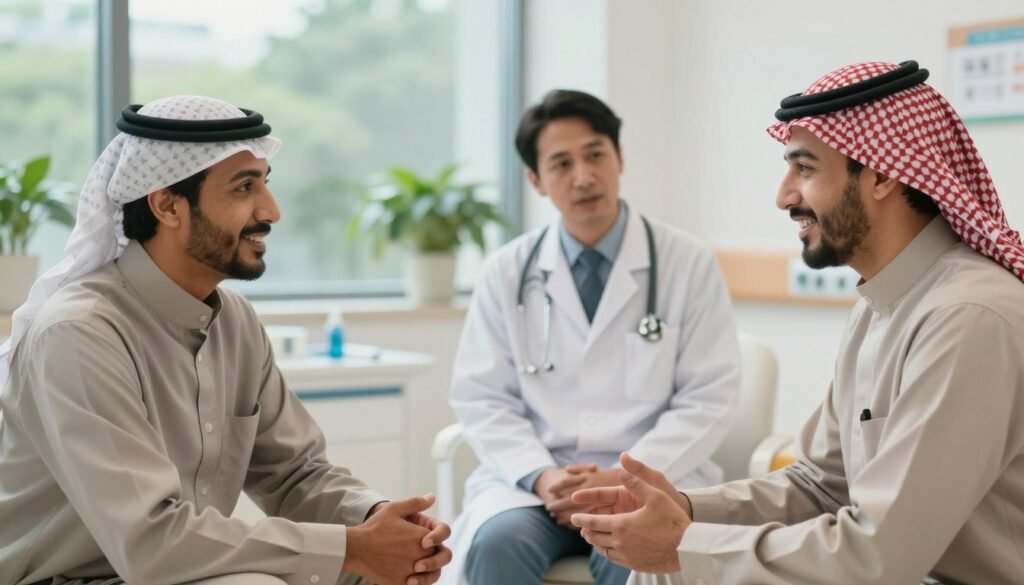
Fuda is internationally recognized for its “3C+P” treatment model, which focuses on cryo-nano knife ablation, interventional therapy, and combined immunotherapy. With nearly 50% of its patients coming from over 100 countries, Fuda has developed a highly specialized infrastructure for international patients, offering spacious accommodations and tailored services that meet the high expectations of Saudi families.
Shanghai is not just China’s financial capital; it is the epicenter of the nation’s medical innovation, housing institutions that serve as the primary destination for patients seeking the most advanced radiation and surgical techniques. For families searching for a top cancer center Shanghai international patients can trust, the city offers a concentration of high-end technology that is unparalleled in Asia.
This institution is widely considered the birthplace of molecular subtyping for breast cancer in China. Dr. Shao Zhimin’s team has redefined the treatment of triple-negative breast cancer (TNBC), improving outcomes for this aggressive subtype by three times through the use of precision chemotherapy and biological markers. The center’s integration of surgical oncology, radiation, and systemic therapy within an academic framework ensures that patients have access to the most recent clinical trial data and therapeutic breakthroughs.
For tumors that are deep-seated or located near critical organs, traditional radiation therapy can sometimes cause significant damage to healthy tissue. The Shanghai Proton and Heavy Ion Center addresses this through the use of heavy-ion therapy, a highly precise radiation treatment that is still rare globally. This technology uses the “Bragg Peak” phenomenon, where the radiation beam releases its maximum energy exactly at the tumor site and stops immediately, protecting the surrounding brain tissue, spinal cord, or heart. This level of precision is particularly vital for pediatric oncology, where protecting a growing child’s organs is of paramount importance.
Shanghai’s top hospitals have established specialized international medical departments that function as “hospitals within hospitals”. These departments, such as those at Zhongshan Hospital or Huashan Hospital, offer:

One of the most significant insights gleaned from China’s oncology centers is the efficacy of the “3C+P” treatment model, pioneered at institutions like Fuda Cancer Hospital. For many GCC patients who have been told that their stage IV cancer is “untreatable” by traditional surgery or chemotherapy, this model offers a secondary clinical pathway.
Unlike traditional surgery, which requires large incisions and long recovery times, cryoablation uses extreme cold (argon gas) followed by rapid heating (helium gas) to destroy tumor cells. This “cold and hot” cycle shatters the cell membranes of the tumor while leaving the surrounding vascular structures intact. It is an ideal solution for tumors in the pancreas, liver, or prostate that are located near major blood vessels where traditional surgery would be too risky.
Interventional therapy involves the use of a microcatheter to deliver high-concentration chemotherapy drugs directly to the tumor’s blood supply. By bypassing the general bloodstream, doctors can use much higher doses of medication on the cancer itself while dramatically reducing the systemic side effects like hair loss, nausea, and immune suppression that are common with traditional chemotherapy.
The “P” in the model stands for the personalized integration of immunotherapy. China is a world leader in CAR-T therapy, where a patient’s T-cells are genetically modified to recognize and attack specific tumor antigens. When combined with ablation and interventional therapy, immunotherapy helps to “clean up” any remaining microscopic cancer cells and strengthens the body’s natural immune response to prevent recurrence.
A unique element of the Chinese approach is the synergistic integration of TCM. Approximately 81% of oncology trials in China explore the use of herbal medicines—such as Huangqin—to enhance the efficacy of CAR-T therapy and reduce the incidence of cytokine release syndrome (CRS). For the GCC patient, this holistic perspective ensures that the treatment is not just about killing the cancer, but about restoring the patient’s overall well-being and immune balance.
Not every hospital is a leader in every field. Healtra’s doctor-led vetting process ensures that patients are matched with the best hospital in China for cancer treatment based on the specific genomic and histological profile of their disease.
The Cancer Hospital of the Chinese Academy of Medical Sciences in Beijing is the national leader for esophageal cancer. Their surgical teams, led by academician He Jie, perform some of the highest volumes of radical esophagectomies in the world, utilizing robotic-assisted surgery platforms (da Vinci systems) to improve precision in confined thoracic spaces.10 For lung cancer, many centers now use molecular profiling to identify mutations that can be treated with domestically developed PD-1 inhibitors like camrelizumab, which are involved in over 40% of China’s immunotherapy trials.2
Fudan University Shanghai Cancer Center has pioneered the “NanoKnife + thermal perfusion” model for pancreatic cancer. This approach has transformed the prognosis for one of the most difficult-to-treat cancers, significantly increasing 5-year survival rates by focusing on the local microenvironment of the tumor.13 For gastric cancer, the integration of oxaliplatin with traditional herbal medicine has shown a 6.2% absolute benefit in 2-year disease-free survival compared to standard Western protocols.2
Sun Yat-sen University Cancer Center (SYSUCC) remains the undisputed world authority on NPC. By utilizing intensity-modulated radiotherapy (IMRT) and focusing radiation solely on post-chemotherapy tumor volumes, they have achieved 3-year local-regional recurrence-free survival rates of 91.5% while reducing chronic dry mouth (xerostomia) by 60%.
Fudan University is the national leader in breast cancer, specifically for the triple-negative subtype. Their research into capecitabine-based adjuvant therapy has become a global benchmark, reducing the risk of recurrence and distant metastasis by 41% and 37%, respectively. In the realm of gynecologic oncology, the Beijing Cancer Hospital utilizes a combination of radical surgery and precision radiotherapy to achieve some of the highest cure rates in the region.
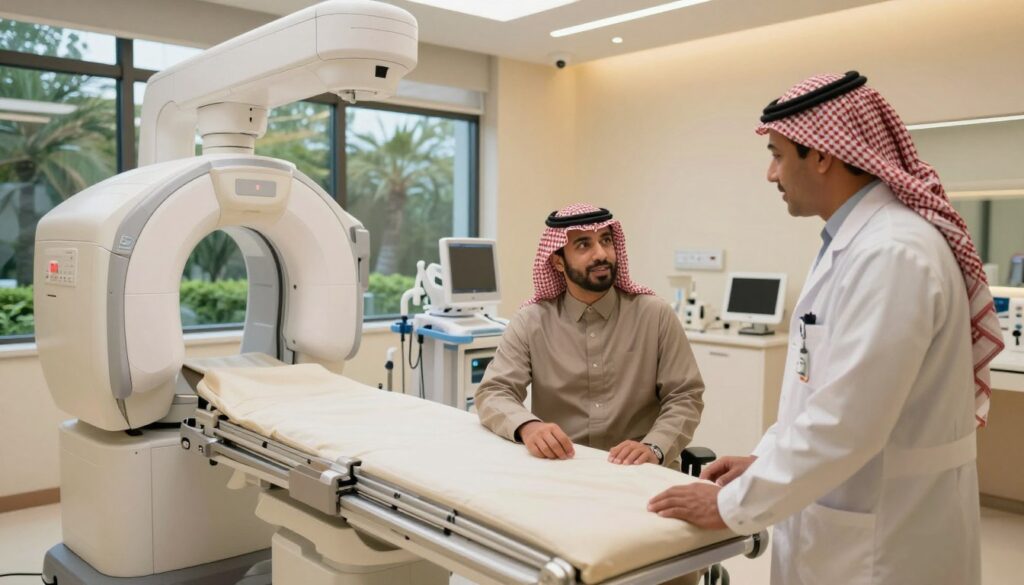
For a family traveling from Saudi Arabia, the medical treatment is only half the journey; the other half is the logistical and cultural experience. Healtra.co prioritizes “human-centered” logistics, ensuring that the patient’s dignity and the family’s comfort are protected at every turn.
The logistical burden for Saudi citizens has been dramatically reduced. As of mid-2025, citizens of Saudi Arabia holding ordinary passports can enter China visa-free for up to 30 days for purposes of medical consultations, tourism, and family visits. For treatments requiring longer stays (such as CAR-T therapy or long-term radiation), Healtra assists families in obtaining S1 or S2 medical visas. These require an official invitation letter from a “Grade A” hospital, which Healtra coordinates as part of our 72-hour planning process.
Language barriers can be a significant source of medical error and emotional stress. Healtra eliminates this by providing:
Respecting Islamic dietary laws and prayer times is non-negotiable for our GCC clients.
The primary “pain point” for Saudi families seeking treatment abroad is the agonizing wait for information. Traditional travel agencies often treat medical travel as a logistics exercise, focusing on flights and hotels while neglecting the clinical core of the journey. Healtra.co flips this model by starting with the clinical reality.
Healtra was founded by doctors with over 25 years of experience in the GCC healthcare system. Our team, led by experts like neurosurgeon Dr. Mohammad Aldaly, reviews every medical report before a single recommendation is made. Unlike commercial agencies driven by hospital commissions, our guidance is based purely on the patient’s medical benefit and the hospital’s proven outcomes.
In a medical crisis, speed is the ultimate currency. Healtra’s commitment to providing a comprehensive medical plan and cost estimate within 72 hours of receiving medical reports is an industry benchmark.4 This plan includes:
Healtra’s role does not end when the patient lands in China. We act as the patient’s advocate throughout the entire process—from coordinating the initial PET-CT scans to managing the structured transfer of medical records back to local doctors in Saudi Arabia once the treatment is complete.7
One of the most persistent myths in medical tourism is that “more expensive” equals “more effective.” The reality of 2025 is that China has redefined the economics of cancer treatment through automated manufacturing, national procurement policies, and a high-volume public hospital system.
Treatment Type | China (Healtra Vetted) | Germany / UK | USA (Self-Pay) |
CAR-T Cell Therapy | $150,000 – $180,000 | $350,000 – $450,000 | $575,000 – $650,000 |
Proton Therapy (Full) | $40,000 – $50,000 | $60,000 – $90,000 | $120,000 – $200,000+ |
Chemotherapy (Cycle) | $1,400 – $5,600 | $7,000 – $12,000 | $10,000 – $25,000 |
Targeted Therapy (Course) | $4,200 – $21,000 | $25,000 – $40,000 | $50,000 – $120,000 |
Robotic Cancer Surgery | $5,000 – $12,000 | $15,000 – $30,000 | $40,000 – $80,000+ |
Diagnostic Workup | $700 – $2,100 | $3,000 – $7,000 | $10,000 – $25,000 |
The lower cost of care in China is not a reflection of lower quality, but rather a result of three structural factors:
In the final analysis, the journey to the best cancer hospital in China for international patients is a journey of faith. For a family in the GCC, that faith is placed not just in the surgeon’s knife, but in the coordinator who guides them through the fog of a medical crisis. Healtra.co is distinguished by its physician-led board, ensuring that every recommendation is clinically sound and that the patient’s safety is the primary metric of success.
We recognize that GCC families are the ultimate “decision-makers.” Our role is to empower you with data, transparency, and a fast, accredited pathway that replaces panic with action. By combining China’s cutting-edge technologies—such as the “Bragg Peak” precision of the Shanghai Proton Center or the 90% cure rates for lymphoma in Beijing—with Healtra’s dedicated Arabic support and 72-hour medical plans, we offer a future where geography is no longer a barrier to survival.
Visual Suggestions for the Blog:
Take Control of Your Healing Journey Today
Don’t let time be the deciding factor in your fight against cancer. Join the hundreds of Saudi and GCC families who have found a second chance through China’s world-class oncology centers. At Healtra.co, we provide the trust, the technology, and the 72-hour plan you need to move forward with confidence.