

Could a life-changing medical breakthrough be more accessible than you ever imagined? Many patients now look toward East Asia for advanced cancer treatments offering new hope for the future.
Understanding a car-t therapy price comparison remains essential for families planning their medical journey abroad. This guide explores every expense to help you decide which path fits your specific needs best.

We will examine why these prices vary and which specialized medical applications are available for patients today. If you have questions about your options, feel free to contact our medical team.
Finding the right care should never feel like a puzzle. We aim to simplify the process for our friends throughout Saudi Arabia seeking top-tier healthcare solutions across the globe.
As a groundbreaking immunotherapy, CAR-T cell therapy offers new hope to patients with certain types of blood cancers. This innovative treatment involves genetically modifying a patient’s T cells to recognize and attack cancer cells more effectively.
CAR-T cell therapy is a form of immunotherapy that uses a patient’s own T cells, which are a type of white blood cell that plays a key role in the immune system. The process involves extracting T cells from the patient’s blood, genetically modifying them to produce a chimeric antigen receptor (CAR) that targets a specific protein on cancer cells, and then reinfusing these modified cells back into the patient.
The CAR-T cell therapy process involves several key steps:
CAR-T cell therapy has shown significant promise in treating certain types of blood cancers, including:
According to recent studies, CAR-T therapy has achieved remarkable success rates in patients with relapsed or refractory cancers, offering a potential cure for some.
China has become a leading destination for CAR-T cell therapy due to its advanced medical infrastructure, experienced healthcare professionals, and high success rates. Many Chinese hospitals are at the forefront of CAR-T research and treatment, offering state-of-the-art facilities and personalized care to international patients.
For those considering CAR-T therapy in China, it’s essential to research and choose a reputable hospital with a proven track record in CAR-T treatments. Factors such as the hospital’s experience, the expertise of the medical team, and the quality of care can significantly impact the treatment outcome.
For more information on CAR-T therapy and to explore treatment options in China, you can send your Medical report for medical review.
Breaking down the costs associated with CAR-T therapy in China can help patients better understand what to expect when considering this innovative cancer treatment.
The cost of CAR-T therapy in Chinese hospitals varies widely based on several factors, including the type of cancer being treated and the specific hospital.
Treatments for hematological cancers, such as leukemia and lymphoma, have a different cost structure compared to solid tumors. The average cost for CAR-T therapy for these conditions ranges from $250,000 to $400,000.
CAR-T therapy for solid tumors is still in the experimental stages in many countries, but China has made significant strides in this area. The cost can be slightly higher, ranging from $300,000 to $500,000.
Cancer Type | Average Cost Range |
Hematological Cancers | $250,000 – $400,000 |
Solid Tumors | $300,000 – $500,000 |
The cost of CAR-T therapy typically includes several components, such as the initial consultation, treatment procedure, hospitalization, and follow-up care. It’s essential to confirm with the hospital what is included in the quoted price.
“The pricing for CAR-T therapy can be complex and varies significantly between hospitals. Patients should thoroughly discuss the costs with their healthcare provider.”
Beyond the initial treatment cost, there are additional expenses to consider, including pre-treatment testing and post-treatment monitoring.
Before undergoing CAR-T therapy, patients must undergo comprehensive testing to determine their eligibility. This can include blood tests, imaging studies, and other diagnostic procedures, adding to the overall cost.
After the treatment, regular follow-up visits are necessary to monitor the patient’s response and manage any side effects. These visits can incur additional costs.
For more detailed information and personalized assistance, you can contact us at WhatsApp.
Several variables contribute to the overall cost of CAR-T therapy, making it essential to examine each component closely. The final cost is a culmination of various factors that can vary significantly from one patient to another.
The process of manufacturing CAR-T cells is complex and involves significant costs. Personalization is a key aspect, as the therapy is tailored to each patient’s specific needs. This involves extracting T-cells from the patient, modifying them to recognize cancer cells, and then reinfusing them. The cost of this process can be substantial due to the advanced technology and expertise required.
The tier of the hospital and its location play a significant role in determining the cost of CAR-T therapy. Top-tier hospitals with state-of-the-art facilities and renowned specialists tend to charge more for their services. Additionally, hospitals located in major cities or regions with a high cost of living may have higher treatment costs compared to those in less urban areas.
The type of cancer being treated and the complexity of the treatment process also influence the cost. Different cancers may require different approaches to CAR-T therapy, affecting the overall cost. More complex cases may require additional procedures or more intensive care, further impacting the final bill.
The duration of the hospital stay and the level of supportive care needed can significantly affect the total cost. Patients requiring longer hospital stays or more intensive supportive care will incur higher costs. This includes costs associated with accommodation, nursing care, and management of any side effects or complications.
Cost Factor | Description | Impact on Total Cost |
Manufacturing and Personalization | Cost of extracting, modifying, and reinfusing T-cells | High |
Hospital Tier and Location | Costs associated with hospital facilities and location | Variable |
Type of Cancer and Treatment Complexity | Complexity of the cancer type and treatment required | High |
Length of Hospital Stay and Supportive Care | Duration of stay and level of care needed | Variable |
For more detailed information on CAR-T therapy costs and to discuss your specific needs, you can contact us.
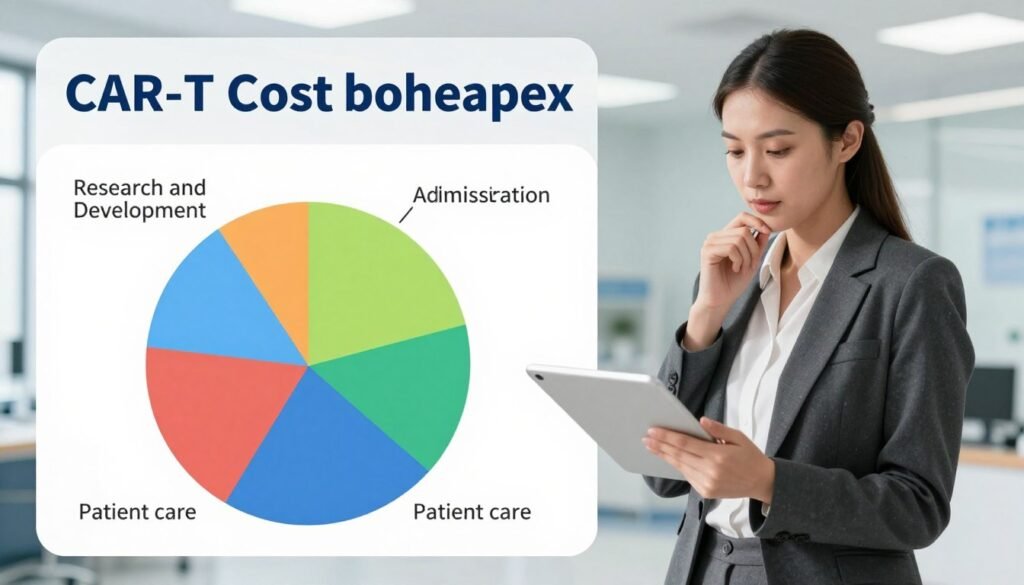
Understanding the factors that contribute to the cost of CAR-T cell therapy can help patients and families make informed decisions about their treatment options. CAR-T cell therapy is a groundbreaking treatment for certain types of cancer, but its cost can be prohibitive for many. Several key factors contribute to the overall expense of this therapy.
CAR-T cell therapy is the result of significant investment in research and development. The process of bringing this therapy to market involves years of clinical trials, testing, and regulatory approvals, all of which are costly. The complexity and novelty of CAR-T therapy mean that the research and development phase is particularly resource-intensive.
The production of CAR-T cells requires highly specialized equipment and facilities. These are needed to ensure that the CAR-T cells are manufactured to the highest standards of quality and safety. The cost of establishing and maintaining such facilities is substantial.

Administering CAR-T cell therapy requires a team of highly trained medical professionals. This includes not only the doctors who administer the therapy but also the laboratory technicians who prepare the CAR-T cells. The training and expertise required for these professionals contribute to the overall cost.
Stringent quality control and safety protocols are in place to ensure that CAR-T cell therapy is both effective and safe for patients. These protocols add to the overall cost but are crucial for minimizing risks associated with the treatment.
Factor | Description | Impact on Cost |
Research and Development | Years of clinical trials and testing | High |
Specialized Equipment and Facilities | Need for advanced manufacturing facilities | High |
Trained Medical Personnel | Requirement for skilled healthcare professionals | High |
Quality Control and Safety | Stringent protocols to ensure safety and efficacy | High |
The cost of CAR-T cell therapy is influenced by a combination of factors, including significant investment in research and development, the need for specialized equipment and facilities, the requirement for highly trained medical personnel, and rigorous quality control and safety protocols. For more detailed information or to discuss treatment options, you can contact us at WhatsApp.
Accessing CAR-T therapy in China is now more feasible for international patients, thanks to the country’s top-tier hospitals and streamlined processes for foreign patients. China’s healthcare system has made significant strides in accommodating foreigners, making it an attractive destination for those seeking this innovative cancer treatment.
Several leading hospitals in China are equipped to handle international patients and offer CAR-T therapy. These hospitals have international departments that cater specifically to the needs of foreign patients, providing services such as translation, visa assistance, and accommodation arrangements.
Beijing and Shanghai are at the forefront of CAR-T therapy in China, with several prestigious hospitals offering this treatment. Some of the notable hospitals include:
These hospitals have a reputation for excellence and have treated numerous international patients.
Guangzhou and Shenzhen are also significant hubs for CAR-T therapy, with hospitals like:
These institutions offer state-of-the-art CAR-T therapy and have experience in treating patients from abroad.
The success rate of CAR-T cell therapy in Chinese hospitals is a critical factor for international patients. Chinese hospitals have reported significant success rates, particularly for certain types of blood cancers.
For patients with relapsed or refractory leukemia and lymphoma, CAR-T therapy has shown remarkable efficacy. Studies have indicated:
Condition | Success Rate |
Acute Lymphoblastic Leukemia (ALL) | 70-90% |
Diffuse Large B-Cell Lymphoma (DLBCL) | 50-70% |
Long-term remission rates for CAR-T therapy are also promising, with some patients achieving complete remission for several years post-treatment.
“CAR-T cell therapy has revolutionized the treatment landscape for certain hematological malignancies, offering new hope to patients who have exhausted other treatment options.”
– Dr. Zhang, Hematologist
To undergo CAR-T therapy in China, patients must undergo a thorough medical evaluation to determine their eligibility. This process typically involves:
For those interested in pursuing CAR-T therapy in China, several steps are involved in getting started.
Patients will need to provide comprehensive medical documentation, including:
International patients will also need to arrange for a medical visa to enter China. Hospitals often assist with this process and provide guidance on travel arrangements.
For further assistance and to facilitate the treatment process, patients can contact medical coordinators at the chosen hospital. They can provide detailed information and support throughout the treatment journey.
CAR-T therapy in China cost is a crucial factor for patients considering this innovative cancer treatment. As discussed, the cost varies based on several factors, including manufacturing and personalization costs, hospital tier and location, type of cancer, and treatment complexity.
Understanding these factors helps patients make informed decisions about their treatment options. Chinese hospitals offering CAR-T therapy have made significant advancements in treating various types of cancer, with success rates comparable to international standards.
For those considering CAR-T therapy in China, it’s essential to research and understand the total cost involved, including additional medical expenses. Patients can contact medical facilitators or hospitals directly for more information and to discuss their eligibility for treatment.
To learn more about CAR-T therapy in China and its associated costs, you can reach out via WhatsApp for personalized guidance and support.