

The diagnosis of a complex cancer represents one of the most challenging moments a family in the Gulf Cooperation Council (GCC) can face. When standard treatments reach their limits, the search for a medical lifeline often extends beyond local borders, leading families to evaluate the world’s most advanced oncological interventions. For residents of Riyadh, Jeddah, and the wider Saudi region, the realization that specialized advancements in particle therapy may be more accessible and affordable in China initiates a crucial transition from local care to global health navigation.
While the Kingdom of Saudi Arabia continues to invest heavily in domestic healthcare under Vision 2030, the demand for outbound medical travel for high-acuity cases like oncology and neurosurgery is growing at a compound annual rate of 11.6%. Within this evolving ecosystem, Saudi patients are recognized as high-value travelers seeking “hyper-personalized” therapies and specialists who possess a level of surgical and radiological “muscle memory” developed through the treatment of thousands of complex cases. China has emerged as a preeminent hub for this level of care, offering a unique combination of world-class infrastructure, rapid clinical responses, and significant cost advantages.
The clinical superiority of particle therapy over traditional photon radiation (X-rays) is rooted in the fundamental laws of physics. Traditional radiation therapy deposits energy along its entire path, meaning it inevitably damages healthy tissue both in front of and behind a tumor. For patients with tumors located near the heart, spine, or optic nerves, this “collateral damage” can lead to severe long-term side effects or secondary malignancies.
Proton and carbon ion therapies utilize the “Bragg Peak” phenomenon to overcome these limitations. Particles are accelerated to high speeds and programmed to release their maximum destructive energy at a precise depth inside the body. Upon reaching the target, the beam stops abruptly, depositing zero radiation dose beyond the tumor. This allows for “Precision Radiotherapy,” where clinicians can target tumors with surgical-like accuracy while sparing critical surrounding structures.
Modality | Particle Weight | Relative Biological Effectiveness (RBE) | Target Accuracy | Ideal For |
Photon (X-Ray) | Massless | 1.0 | Standard | General localized tumors |
Proton Therapy | Light | 1.1 | High | Pediatric, CNS, and prostate |
Carbon Ion (CIRT) | Heavy | 3.0 | Ultra-High | Radioresistant & deep tumors |
Carbon Ion Radiotherapy (CIRT), often described as the “heavy artillery” of oncology, offers a biological potency three times higher than that of protons or X-rays. This high “killing power” causes unrepairable clustered DNA double-strand breaks in cancer cells, making it the treatment of choice for hypoxic or radioresistant tumors, such as advanced pancreatic or liver cancer.
When GCC families evaluate international treatment options, cost transparency and value are paramount. In the United States, a full course of proton therapy can fluctuate between $100,000 and $200,000, often making it inaccessible for many international patients without extensive corporate coverage. In contrast, China has pioneered a more accessible pricing structure driven by lower operational costs, government-regulated price ceilings, and significant domestic technological breakthroughs.
The proton therapy China cost is typically 50% to 70% lower than in the West, with leading centers offering fixed-rate packages that include many auxiliary services. This economic efficiency is not a reflection of lower quality; rather, it is the result of China’s “bang for the buck” model, which focuses on high patient volume and centralized procurement of medical consumables.
Destination | Estimated Cost Range | Cost vs. USA Savings | Key Financial Highlight |
United States | $100,000 – $150,000 | 0% (Base) | Highest global price ceiling |
Germany | $50,000 – $85,000 | 40% – 50% | High cost of living expenses |
China (SPHIC) | $45,000 – $55,000 | 60% – 70% | Flat rate including nursing care |
Turkey | $25,000 – $65,000 | 60% – 80% | Proximity to GCC region |
India | $25,000 – $45,000 | 70% – 80% | High-volume success rates |
The Shanghai proton and heavy ion center cost specifically is structured as a predictable flat rate of approximately 310,000 RMB ($45,018 USD), which has notably not increased since the facility opened in 2015. This transparency allows the Healtra team to provide GCC families with clear, itemized financial roadmaps, ensuring that financial planning can be conducted with confidence and without the fear of hidden “international retail” markups.
Send your Medical Report for review.
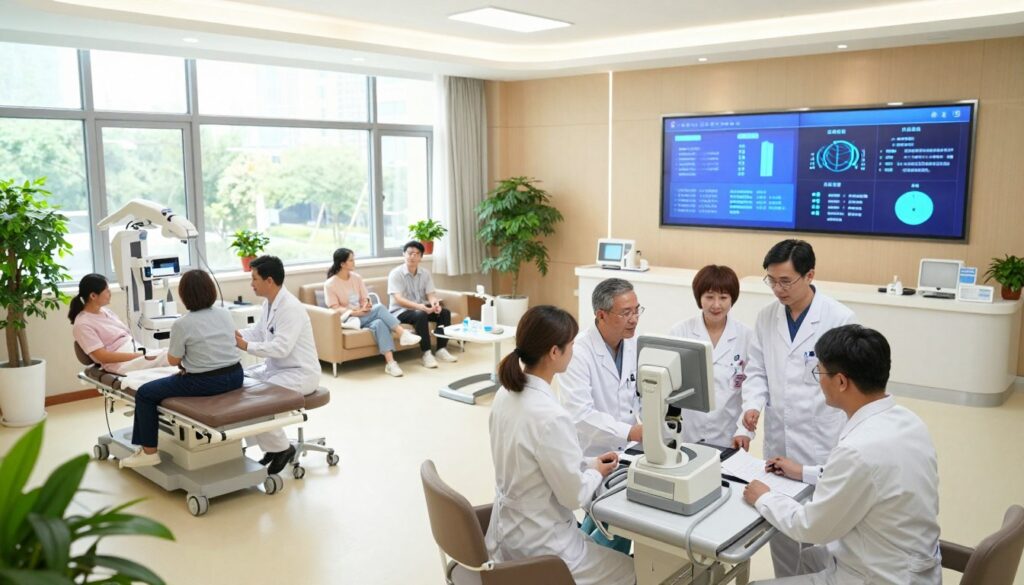
Located in the Pudong New District, the Shanghai Proton and Heavy Ion Center (SPHIC) stands as a beacon of clinical excellence in Asia. Since its inception in 2014, SPHIC has treated over 5,000 patients, utilizing top-tier Western systems like the Siemens IONTRIS alongside advanced imaging capabilities. It was only the third facility in the world to offer both proton and carbon ion therapy simultaneously, positioning it at the forefront of the global particle therapy market.
The center specializes in over 40 types of cancer, focusing on complex cases involving the head and neck, lungs, liver, and prostate. The clinical data emerging from SPHIC is world-class, demonstrating survival rates for “untreatable” cancers that often exceed international averages.
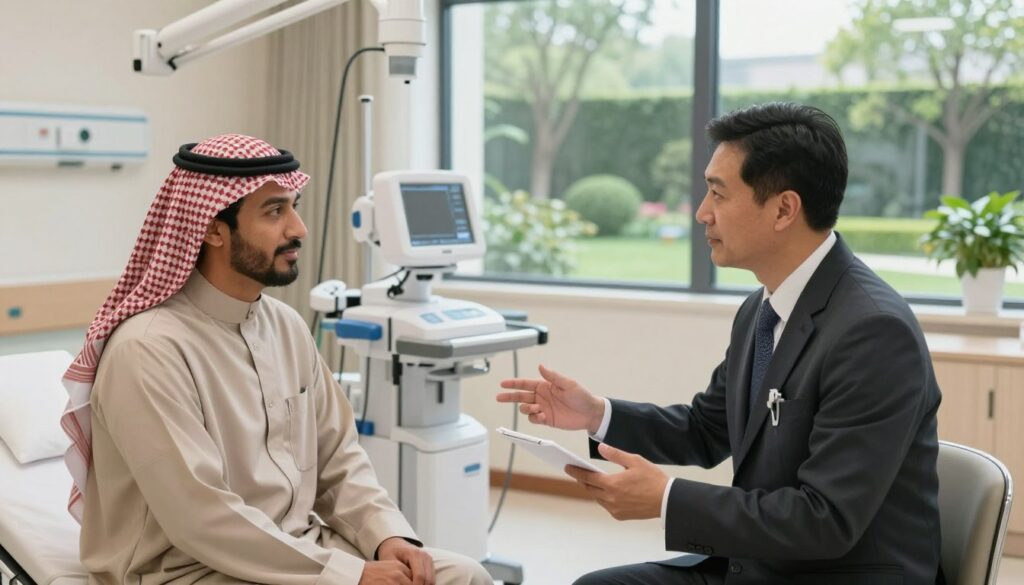
The facility operates with an international department that supports 16 languages, ensuring that communication between the multidisciplinary team and foreign patients is seamless. This structural support is vital for GCC families who require precise clinical updates in a language they understand.
In the realm of medical tourism, the greatest barrier to entry is often a lack of trust. Families are rightfully concerned about “commercial bias” and whether a hospital recommendation is based on clinical quality or financial commission. Healtra.co was founded by physicians with extensive experience in the GCC to solve this specific problem, providing clinical oversight that traditional travel agents cannot offer.
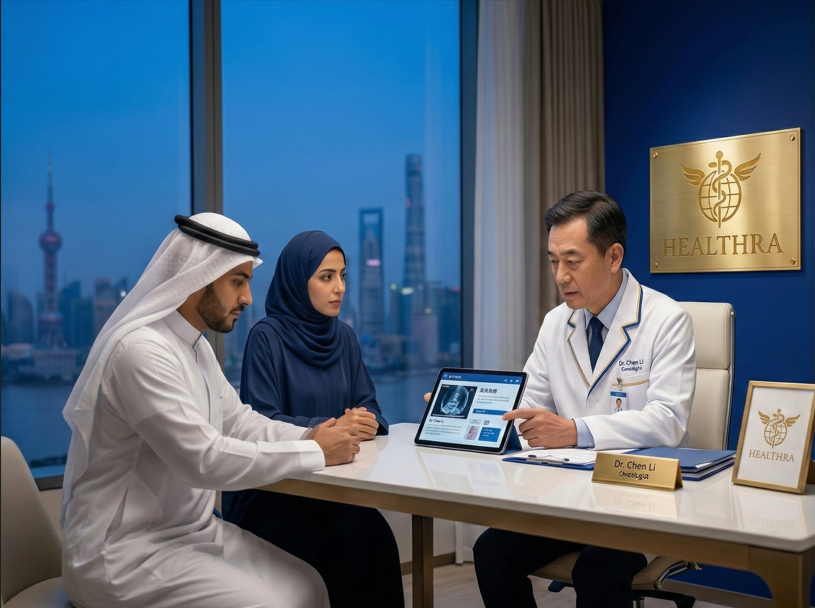
Healtra’s approach is defined by the 72-Hour Medical Plan. When a family in Riyadh or Dubai faces a medical crisis, every day counts. Within 72 hours of receiving a patient’s medical reports and DICOM imaging files, Healtra’s board-certified advisors deliver a comprehensive plan that includes:
This physician-led vetting process ensures that every clinical detail—from pathology reports to neurosurgical scans—is verified before the patient leaves the Kingdom.
Feature | Healtra.co (Doctor-Led) | Independent Travel / Standard Agent |
Response Speed | Plan in 72 Hours | Often 7 – 14 Days |
Case Review | Board-Certified Physicians | Administrative/Sales Staff |
Medical Record Review | Meticulous Doctor-to-Doctor review | Simple administrative transfer |
Arabic Support | Native Arabic Medical Coordinators | Outsourced translation |
Trust Factor | Unbiased Advocate | Potential Commercial Bias |
Send your Medical Report for review.
China’s healthcare landscape offers more than just radiation. It has rapidly emerged as a leading destination for a wide range of innovative oncology therapies that are often used in a multidisciplinary setting. For many international patients, advanced cancer treatment in China involves a combination of precision radiation, immunotherapy, and minimally invasive surgery.
China is a global leader in cellular therapies, particularly CAR-T (Chimeric Antigen Receptor T-cell) therapy, primarily used for hematologic malignancies like leukemia and lymphoma. Chinese Phase II trials have reported overall response rates (ORR) ranging from 79% to 89% for certain B-cell malignancies. Crucially, the cost of CAR-T therapy in China Medical centers ranges from $120,000 to $200,000, which is significantly lower than the $400,000+ cost seen in the United States.
Leading centers like the Guangzhou Fuda Cancer Hospital specialize in advanced ablative techniques such as Cryoimmunotherapy (CSA). This procedure involves destroying tumors through extreme freezing and thawing cycles, which can induce a systemic anti-tumor immune response similar to a personalized vaccine. With over 10,000 procedures performed, Chinese specialists have perfected this approach for tumors that are otherwise inoperable or resistant to chemotherapy.
A unique aspect of the Chinese oncology journey is the mastery of integrating modern Western medicine with Traditional Chinese Medicine (TCM). TCM is used strategically to manage the side effects of radiation and chemotherapy, boost the patient’s immune system, and improve overall quality of life during recovery. For GCC patients, this holistic approach aligns with cultural values that prioritize the well-being of the whole person.
The logistical transition from the Middle East to East Asia requires meticulous planning, especially when dealing with high-acuity medical needs. Healtra.co manages this complexity by acting as a professional bridge between the patient’s home in Saudi Arabia and the hospital in China.
Securing the correct visa is essential for a stress-free journey. Healtra assists with the acquisition of either the S2 Visa (for short-term treatments under 180 days) or the S1 Visa (for extended care plans exceeding 6 months). Since November 2025, China has also expanded its visa-free policies for citizens of several countries, including the UAE and Qatar, allowing for stays of up to 30 days for consultations and diagnostics without a prior visa application.
Before travel begins, the hospital in China requires a comprehensive medical summary in English and original DICOM imaging files (CT, MRI, or PET scans) for dose calculation. Healtra’s medical team ensures that all records are accurately translated and transferred through secure channels, facilitating a remote assessment that confirms the patient is a suitable candidate for treatment.
Upon arrival in Shanghai or Beijing, Healtra’s partners provide a full VIP care continuum, including:
Speak with a Medical Advisor today to start your medical plan.
For Saudi families, medical travel is a collective experience. Decisions often involve the family patriarch and multiple relatives, making the cultural suitability of a destination a non-negotiable factor. Shanghai is an exceptionally international city that has made significant efforts to accommodate the religious and dietary needs of Muslim travelers.
The Pudong district, where SPHIC is located, and the neighboring Lujiazui area offer numerous halal-certified dining options.
Many leading Chinese hospitals also provide halal meals upon request and offer private inpatient rooms with unlimited guest visiting hours, respecting the Saudi tradition of family presence during illness.
Category | Typical Cost (USD) | Notes |
Serviced Apartment (Monthly) | $900 – $1,600 | 1-2 bedrooms in mid-range areas |
Halal Restaurant Meal (Per Person) | $10 – $25 | Inexpensive to mid-range options |
Metro Ticket (Short Trip) | $0.50 – $0.80 | Most efficient way to navigate |
Taxi (Starting Fare) | $2.20 | Metred and reliable |
Medical Interpreter (Daily) | $100 – $300 | Professional specialized support |
The primary motivation for seeking treatment in China is the pursuit of high-volume expertise. Surgery and radiation are, at their core, crafts that follow the rule of “practice makes perfect”. Because of China’s immense population, top-tier specialists in Tier 1 cities see a volume of cases that allows them to refine their techniques to a level of precision rarely seen in lower-volume systems.
For pediatric patients and survivors of CNS tumors, the use of protons or carbon ions significantly reduces the “integral dose” to healthy brain and spine tissue. This physical advantage translates into a measurable reduction in long-term side effects, such as cognitive impairment or hormonal imbalances, allowing patients to maintain a better quality of life post-treatment.
Leading Chinese centers utilize centralized databases to track treatment outcomes, which has contributed to an average annual survival improvement of 1.3% nationwide. Post-treatment care is emphasized through telemedicine follow-ups and remote consultations, ensuring that the patient’s progress is monitored even after they return to the GCC. Healtra facilitators assist in this process by coordinating the transfer of medical records and organizing virtual check-ins with the treating oncologists abroad.
Seeking advanced medical treatment abroad is more than a logistical challenge; it is a profound act of hope and responsibility. For families in Saudi Arabia and the GCC, China offers a world-class alternative to Western healthcare, combining clinical firepower with economic transparency and cultural respect.
Healtra.co stands as a dedicated advocate in this journey. By providing doctor-led guidance, native Arabic support, and guaranteed 72-hour medical plans, Healtra ensures that families can make decisions based on data rather than desperation. The focus is not merely on finding a hospital, but on identifying a lifeline that understands the clinical nuances of a diagnosis and the cultural values of a family.
Safety, transparency, and clinical excellence are the foundations of Healtra’s network. Whether you are exploring proton therapy for a child or evaluating carbon ion therapy for a complex adult tumor, the Healtra team provides the clarity and coordination required to navigate the world’s most advanced medical frontiers with confidence.
Speak with a Medical Advisor today to start your medical plan.